Most moving stress comes from doing things in the wrong order. Boxes get packed before the purge, the truck is booked after the good dates are gone, and the change-of-address form gets filled out from the new kitchen floor. This checklist puts the work in the order our Denver crews wish every customer followed, from eight weeks out to the week after you land. There is a short version at the end for anyone who has 48 hours instead of eight weeks.
Eight weeks out: decide, declutter, budget
Run the three-pile purge first
Everything you own goes into keep, sell-or-donate, or trash. The test is simple: have you used it in the last year? Holiday decorations and camping gear get a pass. The worn-out patio set does not. Local moves are billed by the hour and long-distance moves by weight or cubic feet, so every box you do not pack is money you do not spend.
Denver makes the donate pile easy. Most large charities will schedule a pickup for furniture, and the big electronics retailers take old TVs, printers and laptops for recycling at no charge. For a garage full of junk, a removal company clears it in an afternoon.
Set the budget
Write down the mover’s estimate, packing materials, storage if your dates do not line up, pet boarding or childcare for moving day, and travel if you are leaving the state. Then get three written estimates from surveyed quotes, not phone guesses. If you have not picked a company yet, our guide on how to choose a moving company in Denver covers the license checks and the red flags.
Book the date
Summer weekends and the last few days of any month go first. If your dates are flexible, a mid-week, mid-month move between October and April is cheaper and you will have your pick of crews. Rocky Movers holds a date with a $200 deposit that comes off the final bill.
Four weeks out: supplies and the rooms you can live without
Get more boxes than you think you need
A one-bedroom takes roughly 20 to 30 boxes, a two-bedroom 40 to 60, a three-bedroom 60 to 90, plus dish packs, wardrobe boxes and mirror cartons. Use proper packing tape, not masking tape, and paper rather than newsprint, which stains. Grocery stores and friends who just moved are good free sources. On a local move with us, packing supplies are free, which removes the whole errand.
Pack the low-traffic rooms
Garage, basement, attic, guest room, storage closets, books and off-season clothes. Clear a space in the middle of the garage and sort into the three piles as you go. Tools go back in their toolbox with sharp edges wrapped, and any fuel gets drained from mowers and trimmers now, because it cannot go on the truck later.
Start the paperwork
Give your landlord written notice if you rent, usually 30 days minimum but check the lease. Book time off work. If kids are changing schools, request records now.
Two weeks out: bedrooms, admin, and the hacks that actually save time
Address and utilities
File the change of address with USPS online, then update banks, insurers, the DMV, your employer and any subscriptions. Schedule utility stops and starts so power, gas, water and internet are live the day you arrive, not the day after. Denver’s utilities let you do most of this online in a few minutes each.
Bedrooms and closets
- Hanging clothes stay hanging. Poke a hole in the bottom of a large trash bag, slide it down over a bundle of hangers, and tie it off. Drop the bundles into wardrobe boxes.
- Leave the drawers full. Tape the drawers shut or stretch-wrap the whole dresser. Empty only the heavy ones. Our crews will tell you if a piece needs to travel empty.
- Color-code by room. One colored tape per room, on two sides of every box. The crew unloads straight into the right rooms without asking.
- Jewelry in egg cartons. One piece per cup, lid taped shut, then into your own bag, not the truck.
- Glasses in socks. Slide each glass into a clean sock before boxing. It is faster than paper and just as safe.
- Photograph the electronics. Take a picture of the back of the TV and the router before unplugging. Bag the cables and tape the bag to the device.
- Hardware in sandwich bags. Every bolt and bracket from disassembled furniture goes in a labeled bag taped to the piece it came from.
Kids and pets
Let children pack their own room with their own box and marker. Keep routines steady: practices, bedtimes, family dinners. Book a sitter or a kennel for moving day itself, because an open front door and a loading ramp are not a safe place for either. Leave the litter box and the dog’s bed for last so the animals have something familiar until the truck pulls away.
The last week: kitchen, bathroom, essentials bag
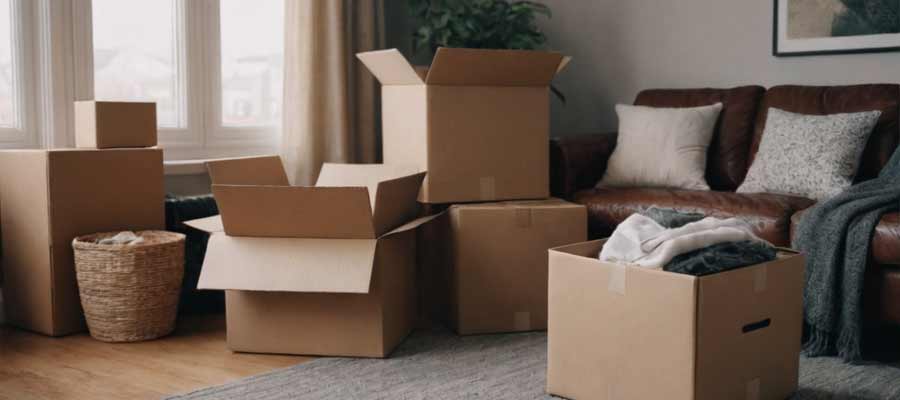
The kitchen is the room that eats the schedule. Pack it in two passes: serving dishes, small appliances and the good glasses early in the week, then daily plates and the coffee maker the night before. Plates travel on edge in a dish pack, never flat. Wrap each glass and nest them upright. Fill every gap with crumpled paper until nothing rattles.
The main bathroom gets packed last, an hour before the crew arrives. Liquids go in zip bags. Aerosols, bleach, nail polish remover and ammonia cannot ride in the truck, so use them up or leave them.
Pack an essentials bag per person and put it in the car: two changes of clothes, toiletries, medication, chargers, important documents, snacks, a first-aid kit, and bedding for the first night. A box of basic kitchen items and the toolkit for reassembly goes in the car too. If you are heading out of state, our long-distance packing checklist has the tighter version of all of this, because interstate boxes have to survive days on the road.
Moving day in Denver
- Be up before the crew. Stage boxes near the door or the garage so the truck loads fast. On hourly local moves that is money.
- Clear the path: toys, rugs, cords, and in winter, snow and ice on the walk and driveway. A salted path at 7 a.m. saves a fall and a delay.
- If you live on a street with tight parking, save a spot for the truck the night before with your own cars or cones. Downtown and Capitol Hill buildings often need the elevator reserved and a certificate of insurance on file. Ask your building manager a week ahead.
- Walk the crew through the house once, point out fragile and do-not-pack items, then get out of the way.
- Do a final sweep of closets, the dishwasher, the oven and the garage rafters before you sign the inventory.
The first week after
Unpack a few boxes a day, not the whole house in one night. Kitchen and bathrooms first so the house works, then bedrooms, then everything else. Flatten boxes as you go. If you used Rocky Movers, unpacking and debris removal can be added to the job so the cartons are gone the same day.
Only have 48 hours?
It happens: a job start moved up, a lease fell through, a sale closed early. Here is the compressed version.
- Call movers first, before you pack anything. Ask about next-day availability and packing services. A two-person packing crew clears a kitchen in a morning.
- Do a fast purge: anything you would not pay to move goes to the curb or the donation pile. Skip the sorting into finer categories.
- Pack room by room with the essentials bag done first, not last.
- Photograph valuables before they go in a box.
- File the USPS change of address and the utility transfers from your phone while the crew loads.
- Ask about storage in Denver if the new place is not ready. Loading into storage today and delivering next week beats a rushed double move.
Questions we get every week
What is the hardest room to pack?
The kitchen. It has the most fragile items, the heaviest boxes and the things you use right up to the last morning. Start it early and pack it in two passes.
How far ahead should I book a Denver mover?
Four to six weeks for a local move, eight to twelve for long-distance, and longer for summer weekends. Off-season dates can often be booked within a week or two.
Is a DIY move really cheaper?
Add up the truck rental, fuel, a day or two off work, pizza for the friends who showed up and the friend who did not, and the risk to your back and your furniture. For anything larger than a studio, professional local movers are usually close in cost and far lower in risk.
What should never go on the moving truck?
Propane, gasoline, aerosols, paint, pool chemicals, bleach and ammonia, perishable food, plants on interstate moves, firearms and ammunition, and anything irreplaceable like passports, cash, jewelry and medication. Those ride with you.
Ready to book the date?
Rocky Movers has moved Denver households since 2009 under USDOT 3077926 and Colorado PUC permit HHG-00594. Every move starts with a free in-home or video survey and a written price. See our Denver local moving page for how local jobs are priced, or call (303) 317-6896 to check a date.